

At KENSRI, we believe digital literacy is no longer optional – it’s essential. Our Computer Science curriculum is designed to equip students not just to use technology, but to innovate with it.
By blending theory with hands on learning, students explore a range of topics – from hardware and software fundamentals to advanced coding, app development and emerging technologies. Our goal is to nurture logical problem-solvers, creative thinkers and responsible digital citizens.
At every stage, we emphasize ethical online behavior, encouraging students to build technology with integrity and purpose. KENSRI students don’t just learn how to code – they learn how to think.
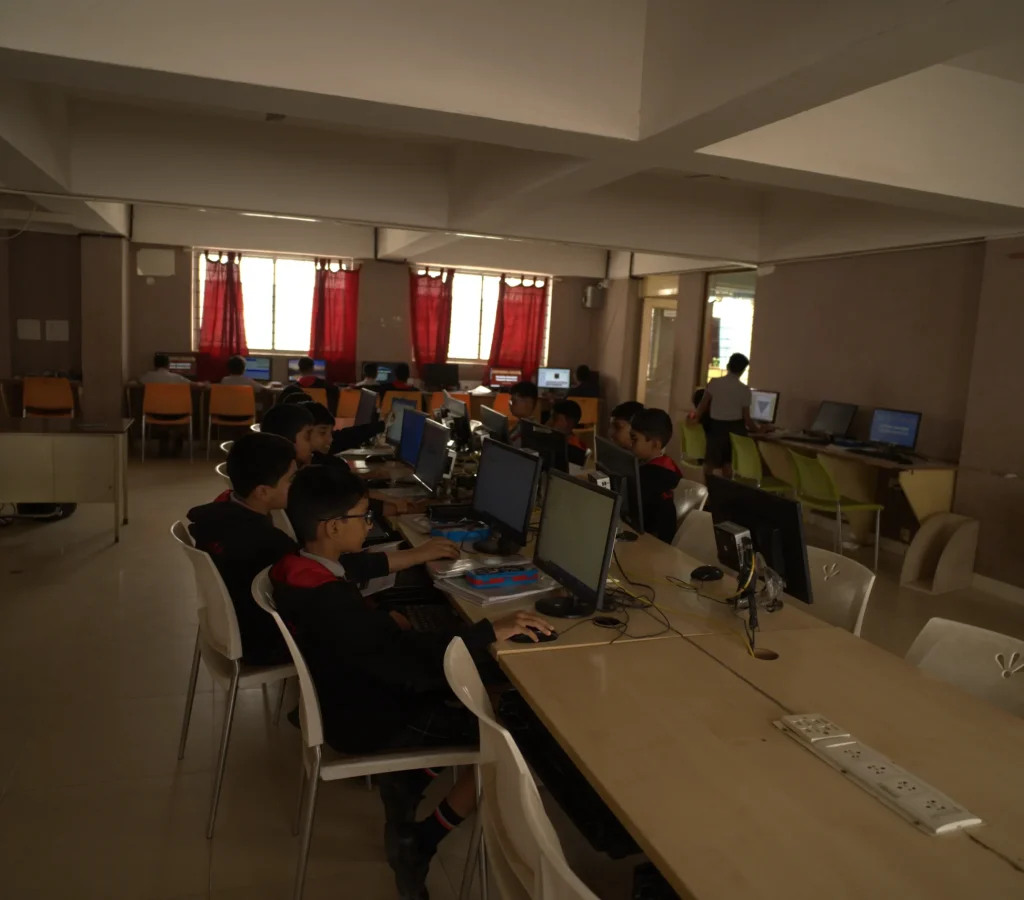
Hardware & Connectivity: Computer Parts & functions
Applications & Creativity: MS Paint, Notepad
Logic & Programming: Introduction to logical thinking
Hardware & Connectivity: Fundamentals, history & generations of computers, Internet services, cloud computing
Applications & Creativity: MS Office applications, Designing and simple animations with Krita
Logic & Programming: Computational thinking and programming with Scratch.
Hardware & Connectivity: Networking & Cyber Security
Applications & Creativity: MS Office applications, Designing and animations with Krita, MySQL
Logic & Programming: Computational thinking and programming with Makecode Arcade, Python, Robots and AI Reflection, Project cycle, Math AI, Introduction to Generative AI
Hardware & Connectivity: Encoding schemes, Societal impact, Networking & Cyber Security
Applications & Creativity: MySQL
Logic & Programming: Computational thinking and programming with Python, Connectivity.

Develop Practical skills through lab based, real-world challenges: Engage students in hands on coding, hardware interaction and project based tasks to apply theoretical knowledge in real-life scenarios.
Enhance learning with Simulations and Digital Tools: Use interactive platforms like Scratch, Python IDEs and web development tools to visualize and experiment with coding concepts effectively.
Foster Teamwork and Problem-Solving Abilities: Encourage collaborative projects and group tasks that build communication, critical thinking and solution-oriented mindsets.
Promote Interdisciplinary connections: Integrate Computer Science with subjects like Science, Math, Social and Expression to show its real-world relevance and broaden students creative and analytical thinking.


Creative contributions to FLOW Exposition:
Students actively participate in designing and developing innovative and interactive stalls for the FLOW Exposition titled “Dolls to Robotics”. Their contribution showcase creativity, technical skills and a strong understanding of how technology blends with artistic expression.
Enhancement of the Computer Science Lab:
Students play an integral role in continuously improving the Computer Science Lab offering suggestions and implementing upgrades to create a more engaging and resource-rich learning environment.
Student Led Programs
Through student-led initiatives, peer-to-peer learning thrives, fostering a collaborative culture where students take the lead in sharing knowledge and skills with their peers.
Development of Interactive Learning Tools:
As part of internship experiences, students develop educational tools such as crosswords, drag and drop activities and other interactive resources. These tools help reinforce classroom concepts while enhancing students logical thinking and programming skills.

Students graduate from KENSRI with:
At KENSRI, we’re not just teaching computer science. We’re building the next generation of digital leaders.
© Copyright 2025. All Rights Reserved By KENSRI School
Make your child’s life full of joy and not going from school to tuitions and integrated classes. Life is much more than this. Let your child use our Tapas program to be an independent learner and be proud of their achievement inside and outside the classroom.