

The Expression Department stands as a vibrant confluence of languages, cultures, and creative thought. Housing English, Kannada, Hindi and Sanskrit, this department is dedicated to nurturing the power of self expression. Here, language is more than a medium for communication; it is a powerful portal for identity, imagination, and intellectual growth.
Through literature, linguistics, narratives, student portfolios and interdisciplinary engagement, we inspire students to explore the depth of human experience across diverse aesthetic traditions. Our programs foster critical thinking, cultural empathy, and articulate expression skills that are indispensable in today’s interconnected world.
Whether delving into classical texts, contemporary discourses, or oral traditions, the Department of Expression is where voices find strength, and ideas take flight.
The department aims to build confident individuals who have the sensibility to understand the ethos of the world and the sensitivity to respond to its clarion call.
The Primary Section is designed to gently introduce young learners to the world of language and expression in an engaging and enjoyable manner. The main objective is to initiate the tiny tots into the magic of words through playful and interactive learning experiences.
Activities are centered around building early language skills by making learning fun and memorable. Children explore alphabets, rhymes, and action songs that help enhance both verbal and motor skills. Special focus is given to pattern writing and developing fine motor coordination, enabling children to begin writing within four-lined books with confidence.
To strengthen word-object recognition, flash cards are used extensively, promoting visual learning and early vocabulary development. These foundational activities aim to create a joyful, stimulating environment where children develop a love for learning and a strong base in language from the very beginning.
The Primary Section has been strategically designed to lay a strong and lasting foundation in the core language skills of Listening, Speaking, Writing, and Reading (LSWR). With a holistic approach that integrates both academic and co-curricular activities, the program ensures that students not only grasp language fundamentals but also apply them confidently and creatively.
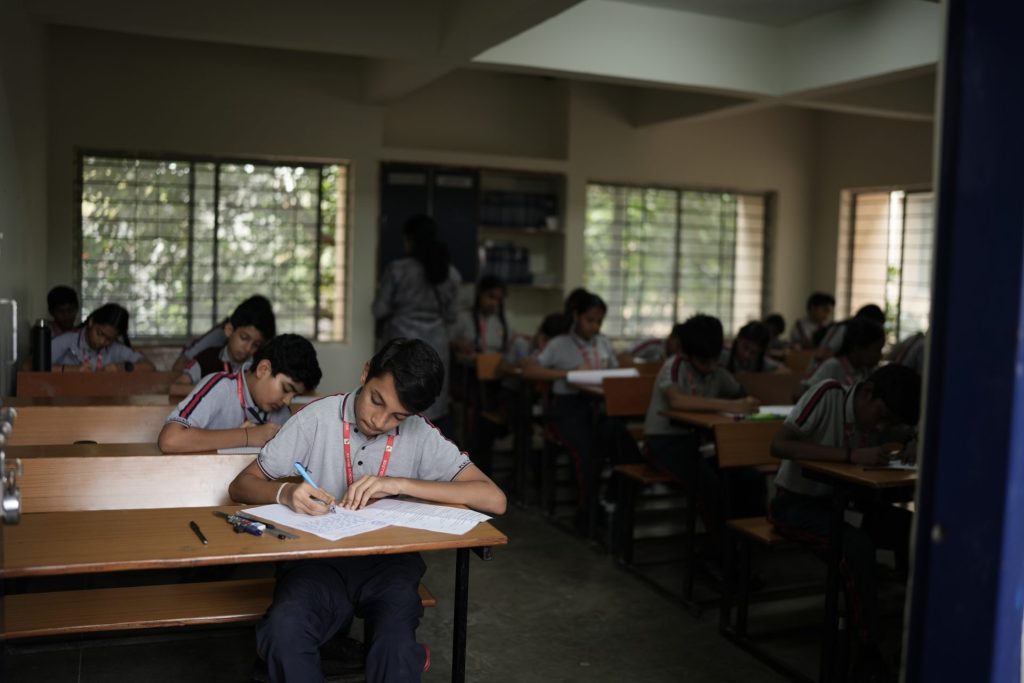
In the secondary section, the English curriculum is strategically structured to reinforce foundational concepts learned in the primary years while expanding students’ linguistic, literary, and communicative competencies. This progression is designed to ensure a seamless academic transition and deeper engagement with the subject
Key focus areas include the application of language skills in real-life contexts—particularly in writing, literary analysis, and spoken communication. Students are guided to use English not just as a subject, but as a tool for expression, critical thinking, and interpersonal interaction.
Here the emphasis is on the development of essential academic and life skills such as note-taking and note-making, which support independent learning and effective study habits. Students are also trained to compile and curate their work through a student portfolio, which encourages reflection and tracks their growth over time. This portfolio later contributes to the building of a strong resumé, showcasing their capabilities and achievements.
Regular assessment of listening and speaking skills ensures continuous improvement in verbal communication, comprehension, and confidence in public speaking. These assessments are designed to be constructive, helping students identify strengths and areas for improvement.
© Copyright 2025. All Rights Reserved By KENSRI School
Make your child’s life full of joy and not going from school to tuitions and integrated classes. Life is much more than this. Let your child use our Tapas program to be an independent learner and be proud of their achievement inside and outside the classroom.